


Posture Could Be the Culprit Behind Your Shoulder Pain

No one likes dealing with shoulder pain. The discomfort and immobility can prevent you from doing daily activities like grabbing something off a high shelf or reaching up to brush your hair. So, when your shoulder starts hurting, it’s important to figure out why.
Often, shoulder pain stems from an injury. For example, take rotator cuff tears, in which the muscles and tendons that wrap the shoulder become damaged: these injuries are common and can result from a sudden traumatic injury like a fall or develop gradually.
However, sometimes, shoulder pain might not have such a clear-cut cause. One of our patients learned this for herself–we’ll call her Diana. She was dealing with persistent shoulder pain and couldn’t figure out why. Fortunately, the physical therapists at Foundation Therapy were on the case.
And the culprit? It turned out to be Diana’s posture.
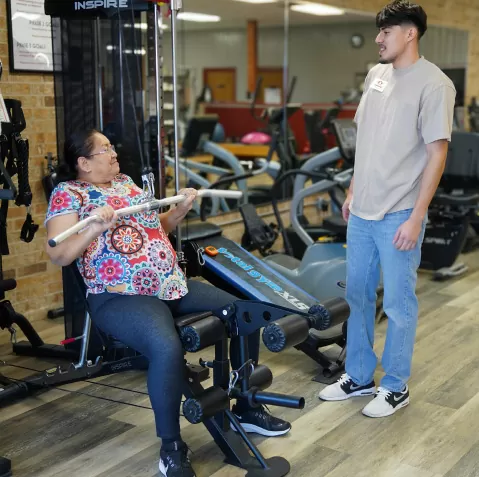
Meet Diana, Receptionist Extraordinaire
Diana had worked as a receptionist and administrative assistant for years. She enjoyed her work, but it did require her to spend long hours sitting in front of a computer as she sifted through spreadsheets and calendar appointments.
Her issues with shoulder pain began gradually. They had always been a little stiff, but the restricted range of motion had worsened in the last few months. She also noticed tightness in her chest and twinges of pain throughout her shoulders and neck.
Diana tried to ignore her symptoms at first, thinking they’d eventually go away on their own. Instead, they became more frequent, worsening enough that Diana struggled to sit at her desk long enough to get any work done. That was when she came to visit us.
Our Physical Therapists Were on the Case
As always, we started Diana with a comprehensive assessment to help us understand the root cause of her discomfort. We took a health history, talked to her about potential injuries, and conducted several movement screens–including a postural screen.
The postural screen was where we made headway. After reviewing Diana’s posture while she was sitting, standing up, and moving around, we noticed the following:
- She held her head forward in relation to her shoulders, a stance called “forward head posture.”
- She tended to round her shoulders, giving her slight kyphosis, or a hunched posture, in her upper back.
- Her shoulder blades were protracted away from her spine.
The signs were clear: Diana had developed upper cross syndrome.
Upper cross syndrome is a condition marked by postural changes that have a waterfall effect throughout the body. Diana’s postural impairments had impacted the muscles in her upper back and shoulder girdle. As a result, the movement in her upper body became impaired, leading to her pain and mobility restrictions.
A Personalized Solution to Lasting Pain Relief
Now that we understood why Diana was experiencing shoulder pain, we could develop a customized treatment to correct her posture and address the muscular impairments and imbalances that had led to her symptoms in the first place.
The foundation of Diana’s treatment was a comprehensive therapeutic exercise program. We began by improving her shoulder’s range of motion through simple mobility exercises.
After a few weeks, Diana was ready to begin strengthening the affected muscles. Using equipment like resistance bands and weights, we guided Diana through targeted exercises that addressed muscular weakness and imbalance.
Throughout her program, we also helped Diana improve her overall posture. Like many people, she thought postural improvements were about “sitting up straight.” In reality, she needed to keep her spine aligned as she moved through different postures throughout the day.
Because Diana had a desk job, we emphasized the importance of changing her posture regularly by taking quick breaks. Diana began using a timer to remind herself to get up every 30 minutes or so and walk around the office.
While it took a little effort on Diana’s part, eventually, her pain receded, and her shoulders were more mobile than they’d been in years. To make sure she didn’t relapse, we provided her with exercises to do at home to keep her upper body strong.
Is Your Posture Causing You Pain?
Diana learned just how important posture is. If you’re struggling with persistent shoulder pain, call the team at Foundation Therapy. We’ll dig down to the source–and give you the guidance you need to correct the issue.

Return to PT at Foundation Therapy!
Miss feeling your best? Come back to Foundation Therapy and let us help you get there—schedule your appointment today!


1. Why did Dad bring a ladder to the barbecue?
Because he heard the steaks were high.
2. What’s Dad’s favorite type of music while fixing the sink?
Plumb and bass.
3. Why did Dad put his wallet in the freezer?
He wanted some cold, hard cash.
4. How does Dad measure his grilling success?
In flame-ingos.
5. Why did Dad wear his lawnmower to the dance?
Because he wanted to cut a rug.
6. Did you hear about the restaurant on the moon?
Great food, no atmosphere.
7. What did the ocean say to the beach?
Nothing, it just waved.
8. Why don’t skeletons fight each other?
They don’t have the guts.
9. What do you call a fish wearing a bowtie?
Sofishticated.
10. Why did the golfer bring two pairs of pants?
In case he got a hole in one.
June Word Scramble
cresunnse
teaaldcsns
miwsmngi
avoatnic
gdenidw
refiifsle
Answer Key
sunscreen
sandcastle
swimming
vacation
wedding
fireflies

Community Events
Wildlife on the Move
Mon Jun 9th at 2:30 pm
Bridgeport Community Center
Yoga and Wine Y’all
Sat Jun 14th at 10:00 am
Marker Cellars Winery
GAVIN LEE MUSIC
Fri Jun 20th at 7:30 pm
Ritzy B’s & Grill

Follow Us on Social Media!
Patient Spotlight:
“2 years past hip surgery I am just as convinced as ever that my experience with Foundation Therapy prepared me better for my surgery, and post surgery ensured my recovery. I know that if I were to have another physical issue, I could walk in there and Chris and his staff would be right on helping me to get through it. Truly, they were and are a blessing. My Foundation Therapy experience has greatly improved my flexibility and ease of movement. Seeing them before my hip surgery was equally important as my post-surgery therapy. Each of the therapists was supportive and effective. The administrative staff is friendly, helpful and efficient.”— 5-Star Google Review
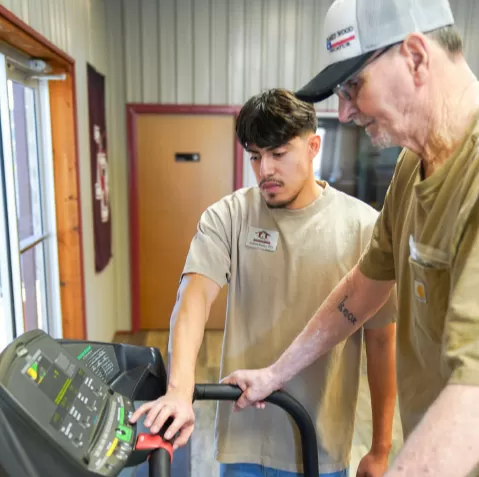
Share Your Success Story

Love your experience with Foundation Therapy? Click the button to leave us a Google review—your feedback helps others find the care they need!
Seasonal Recipe:
Arugula, Grape, and Sunflower Seed Salad
- 3 tablespoons red wine vinegar
- 1 teaspoon honey
- 1 teaspoon maple syrup
- 1/2 teaspoon stone-ground mustard
- 2 teaspoons grapeseed oil
- 7 cups loosely packed baby arugula
- 2 cups red grapes, halved
- 2 tablespoons toasted sunflower seed
- 1 teaspoon chopped fresh thyme
- 1/4 teaspoon salt
- 1/4 teaspoon ground black pepper
Combine vinegar, honey, syrup, and mustard in a small bowl. Gradually add oil, stirring with a whisk. Combine arugula, grapes, seeds, and thyme in a large bowl. Drizzle vinegar mixture over arugula; sprinkle with salt and pepper. Toss gently to coat.
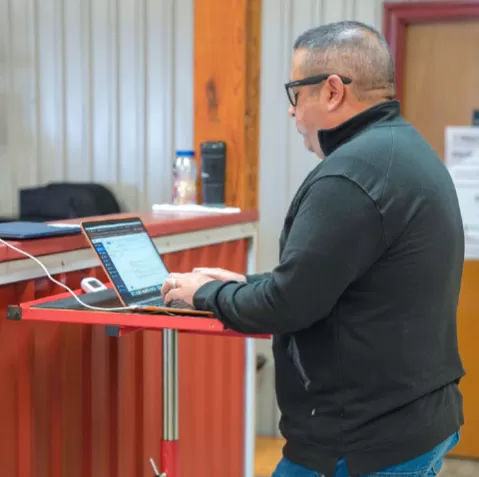
How to Improve Your Posture at Work
One study found that the average person spends a third of their life at work–so if you’re looking to improve your health and wellness, you need to take your job into consideration!
Unfortunately, many jobs can make this challenging. They force you into prolonged postures or require you to perform repetitive movements–both of which can strain your musculoskeletal system.
At Foundation Therapy, our physical therapists can work with you to find solutions to any work-related concerns. Here are a few of the things we might suggest:
1. Find your ideal posture. An ideal posture is one in which your spine rests in its natural alignment, whether sitting, standing, or moving around. This is something we can help you discover!
2. Take frequent breaks. As the saying goes, “Your best posture is your next posture.” Find ways to move your body throughout the day. If you work an office job, this can be as simple as getting up every 30-40 minutes for five minutes.
But even if you have a job that requires you to stand for long periods (such as retail or factory work), you still need to take breaks. Shift your weight, put a leg on a bench, or do some quick stretches–we can help you find quick, simple ways to move.
3. Pay attention to ergonomics: The field of ergonomics focuses on improving your working environment for comfort and efficiency. Make sure your workstation (whether a chair and desk or a workbench) is the right height for your body. Use adaptive equipment as necessary. Our team can provide all the guidance you need!

From Patient to Teammate: Madison’s Full-Circle Journey
Meet Madison Cortez, our compassionate Patient Care Specialist at Foundation Therapy. A Bridgeport, TX native and Texas A&M Psychology graduate, Madison’s journey began as a patient—an experience that inspired her to join the team that once helped her heal.
With a background in healthcare and research administration, Madison excels at creating a smooth, supportive experience for every patient. From scheduling to insurance questions, she’s here to help with empathy and clear communication.
Her core values—compassion, honesty, and courage—guide everything she does. Outside of work, Madison enjoys traveling, reading, painting, and spending time with her sassy pup, Mia.
Madison is proud to be part of a team that truly cares. As she says, “I’ll rise up, I’ll rise unafraid… a thousand times again.
Thank you for subscribing to Foundation Therapy
Refer a Friend

Our purpose at Foundation Therapy is to leave a greater impact on the community around us. In order to achieve our goal we want to change as many lives as possible as we become a beacon of positivity in our community.
Meet Our Team

Chris Hicks
Owner / PT


Kelli Smith
Supervising Clinician/PT

Ali Martinez
Office Manager

Sandra McDonald
Insurance Verification and Authorization Specialist